

Are You Making These Common Mistakes Before Getting an Adult Autism Evaluation NYC? (What Experts Want You to Know)

You've been researching adult autism for months. Maybe you stumbled across a TikTok that made your jaw drop, or a friend mentioned their diagnosis and suddenly everything clicked. The more you learn, the more you recognize yourself in the descriptions: but now you're wondering: Am I doing this right?
Here's the thing: you're not alone in feeling overwhelmed by the evaluation process. As a therapist who specializes in adult autism evaluations, I see women every day who are brilliant, capable, and absolutely exhausted from years of not understanding themselves. And unfortunately, I also see the same mistakes happening over and over again that can derail your journey to answers.
Let me share what I wish every woman knew before pursuing an adult autism evaluation Manhattan: because getting this right from the start can save you time, money, and a whole lot of heartache.
Mistake #1: Choosing Any Provider Who Says They Do Autism Evaluations
This is the big one, and it breaks my heart every time I hear it.
Not all providers who offer autism evaluations actually understand autism in adults: especially autism in women. You might find someone with impressive credentials who's been diagnosing autism for decades, but if their experience is primarily with children or if they hold outdated views about what autism "looks like," you could walk away with a dismissive "you're not autistic enough" conversation that leaves you questioning everything.
What experts want you to know: Look specifically for a neurodiversity-affirming provider. This means someone who:

Understands that autism presents differently in adults than children
Recognizes masking and how women often camouflage their traits
Doesn't dismiss your concerns because you've developed coping strategies
Views autism through a strengths-based lens rather than a deficit model
Listens to your lived experiences with respect
I can't tell you how many women have come to me after being told by other providers that they're "too social" or "make too much eye contact" to be autistic. That's not how this works, and you deserve better.
Mistake #2: Assuming Standardized Tests Tell the Whole Story
Here's something that might surprise you: those gold-standard autism assessment tools? They weren't designed with adult women in mind.
Tests like the ADOS-2 and ADI-R are valuable, but they can miss the mark for adults who've spent decades learning to mask their traits. If you're sitting in a clinical setting, trying your best to appear "normal" (because that's what you've always done), these tests might not capture your authentic autistic experience.
What you need to know:
A good evaluation looks beyond standardized tests
Your evaluator should ask about executive functioning challenges
They should explore how you've adapted and compensated over the years
Your daily life experiences matter more than how you perform in a clinical setting
The goal isn't to see if you can "prove" you're autistic enough for a test: it's to understand how autism has shaped your life and experiences.
Mistake #3: Not Preparing Your Developmental History
This one catches a lot of people off guard. Autism is a developmental condition, which means it's been present throughout your life: even if it didn't cause obvious problems until adulthood.
Many women don't realize they need to dig into their childhood experiences because they were the "good girls" who didn't cause trouble. But your evaluator needs to understand your early development, even if your autism was subtle or well-hidden.
How to prepare:
Gather any old report cards or teacher comments
Think about your sensory experiences as a child
Consider your social interactions and friendships (or lack thereof)
Reflect on any repetitive behaviors or intense interests
Ask family members about your early development if possible
Don't worry if you can't remember everything or if no one else is available to provide information. A skilled evaluator can work with what you have and help you explore these areas during your sessions.
Mistake #4: Not Understanding How Masking Complicates Diagnosis
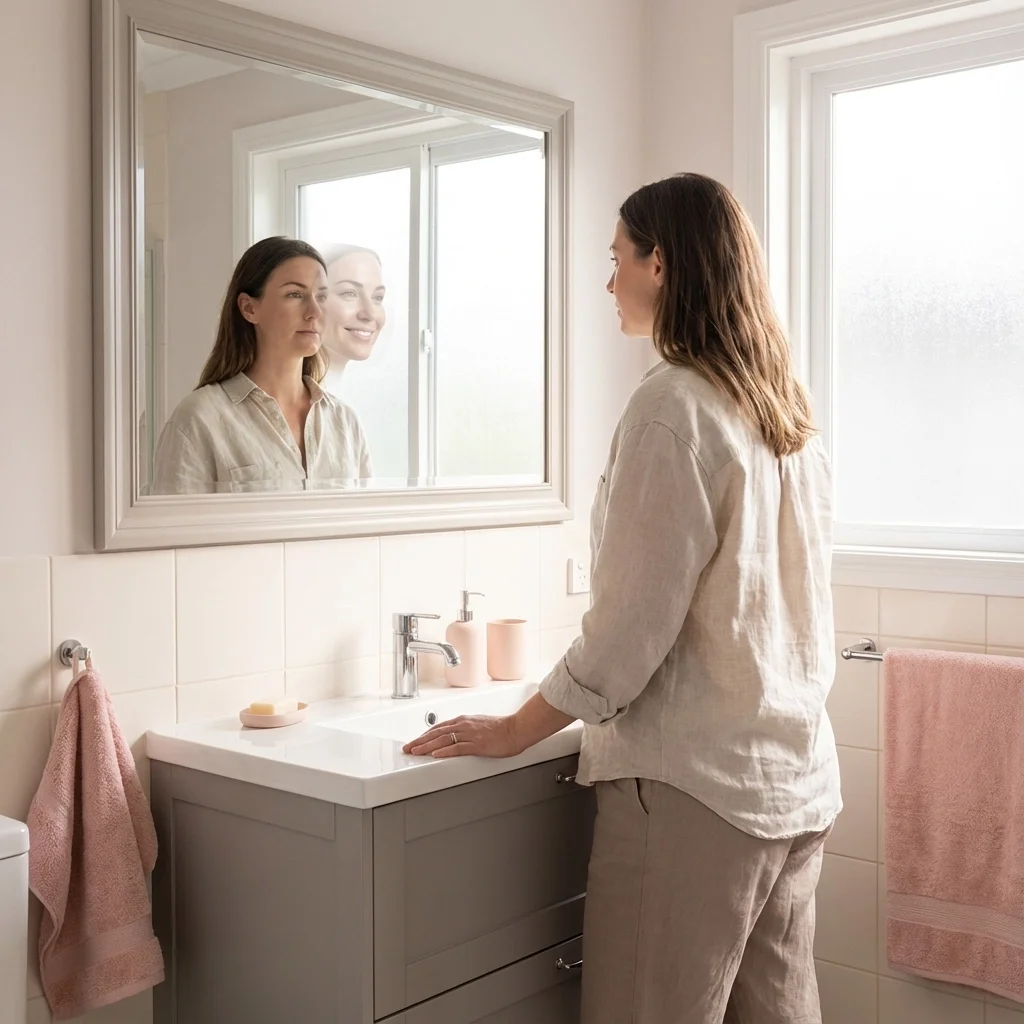
If you're a woman researching adult autism, you've probably heard about masking. But you might not realize how much this can complicate your evaluation process.
Masking is when you suppress or camouflage your autistic traits to fit in socially. You might have learned to make eye contact even though it's uncomfortable, force yourself to engage in small talk, or copy others' social behaviors. This is survival, not evidence that you're not autistic.
The reality: Many autistic women become so skilled at masking that even they don't recognize their own autistic traits. You might think, "But I can do small talk!" or "I have friends!" without realizing the enormous energy it takes you to maintain these social connections.
A qualified evaluator will help you explore what's happening underneath the mask: the exhaustion, the scripts you use, the way you study social situations like you're learning a foreign language.
Mistake #5: Rushing Into the First Available Appointment
I get it: once you start recognizing yourself in autism descriptions, you want answers now. But choosing the wrong provider just because they have an opening next week can set you back months.
Take time to research providers who:
Specialize in adult autism evaluations
Understand autism in women specifically
Have experience with late-diagnosed adults
Use a collaborative, respectful approach
Offer comprehensive evaluations, not just quick screenings
The right provider is worth the wait: but that doesn't mean you have to wait forever.
Mistake #6: Assuming You Need Expensive Neuropsychological Testing
Here's something that surprises many people: you don't always need comprehensive neuropsychological testing to get an autism evaluation. Some providers will refer you for hours of IQ testing and cognitive assessments that can cost thousands of dollars: but that's not always necessary for an autism diagnosis.
What you should know:
Adult autism evaluations focus on developmental history and current presentation
While some cognitive assessment can be helpful, extensive IQ testing isn't typically required
A thorough clinical evaluation with autism-specific tools is often sufficient
Ask upfront what testing is included and why
Don't let anyone convince you that you need the most expensive, time-intensive option unless there's a clear clinical reason.
Why Choose the Right Provider From the Start
This brings me to why I'm passionate about doing this work differently. When women come to my practice, they often tell me they wish they'd found me sooner.
Here's what sets apart a collaborative, action-oriented adult autism evaluation NYC:
Online convenience: You can participate from your own home, where you feel most comfortable and authentic. No need to navigate unfamiliar offices or worry about masking in a clinical setting.
No endless waiting lists: I typically have evaluation appointments available within 1-2 weeks. When you're ready for answers, you shouldn't have to wait months.
Focused on your needs: I provide comprehensive autism evaluations without requiring expensive neuropsychological or IQ testing that isn't relevant to your goals.
Women-centered approach: I understand how autism presents differently in women and how societal expectations have shaped your experiences.
You can learn more about my approach to adult autism evaluations in Manhattan and what makes my process different.
What Happens Next?
Getting an autism evaluation as an adult is a brave step. You're choosing to understand yourself more deeply, even when that process feels uncertain or scary.
The most important thing to remember? You deserve a provider who listens to you, respects your experiences, and approaches this process as a collaboration rather than an interrogation.
Whether you're just starting to explore autism or you're ready to move forward with an evaluation, you don't have to figure this out alone. The right support makes all the difference: not just in getting accurate answers, but in feeling understood and validated throughout the process.
Ready to take the next step? I invite you to learn more about my adult autism evaluations in NYC or reach out with any questions you might have by clicking the button below. You deserve answers, and you deserve to understand yourself fully.
Remember: seeking evaluation doesn't mean anything is "wrong" with you. It means you're brave enough to seek understanding, and that's something to be proud of.
About the Author
Gayle Weill, LCSW is a licensed psychotherapist specializing in maternal mental health, adoption competency, and adult autism evaluations. She provides virtual therapy to women and mothers in NYC. Through her clinical work, writing, and educational resources, she helps moms of sensitive children regulate their own nervous systems so they can respond with clarity rather than overwhelm.
