

Why Your Adopted Child's Meltdown Isn't Your Fault (and How to Help)
Written by Gayle Weill, LCSW

You’re in the middle of the kitchen, dinner is halfway prepped, and suddenly, the air shifts. Your child, who was peacefully coloring five minutes ago, is now screaming on the floor because you cut the sandwich into triangles instead of squares. Or maybe it wasn't even the sandwich, maybe it was just a look you gave them, or the fact that it’s Tuesday.
In that moment, as the decibels rise and your own heart starts to hammer against your ribs, a very familiar voice probably starts whispering in your ear: “I’m failing at this.” “If I were a better mother, they wouldn't be this way.” “Everyone else seems to have it figured out, so why am I struggling so much?”
If you’ve felt that weight, I want you to take a deep breath right now. You are human, and you are doing one of the hardest jobs on the planet. That voice in your head? It’s wrong.
The meltdowns, the "defiance," and the emotional rollercoasters aren't a reflection of your parenting skills or your love for your child. As an adoption therapist, I see this every single day. These outbursts are often the result of complex biological and emotional wiring that was in place long before your child ever came home to you.
It’s Biology, Not Bad Behavior
When we talk about adopted children, especially those who are also "sensitive children", we have to look at the brain. Many adopted children have experienced some form of early trauma, neglect, or even just the fundamental "primal wound" of separation from their birth parents.
These early experiences tell the brain one thing: The world is not safe.
Even if your child was adopted as an infant and has lived in a safe, loving home ever since, that early neurological "programming" can stick around. Their amygdala, the part of the brain responsible for the "fight, flight, or freeze" response, is often set to a much higher sensitivity level than a non-adopted peer.
Think of it like a smoke detector. In most homes, the smoke detector only goes off if there’s an actual fire. In an adopted child’s brain, that smoke detector might go off because someone burned a piece of toast, or even just because the humidity changed. The meltdown isn't "bad behavior"; it’s a full-blown survival response. Their body believes they are in danger, even if the "danger" is just a transition from playtime to bath time.
The "Sensitive Child" Intersection
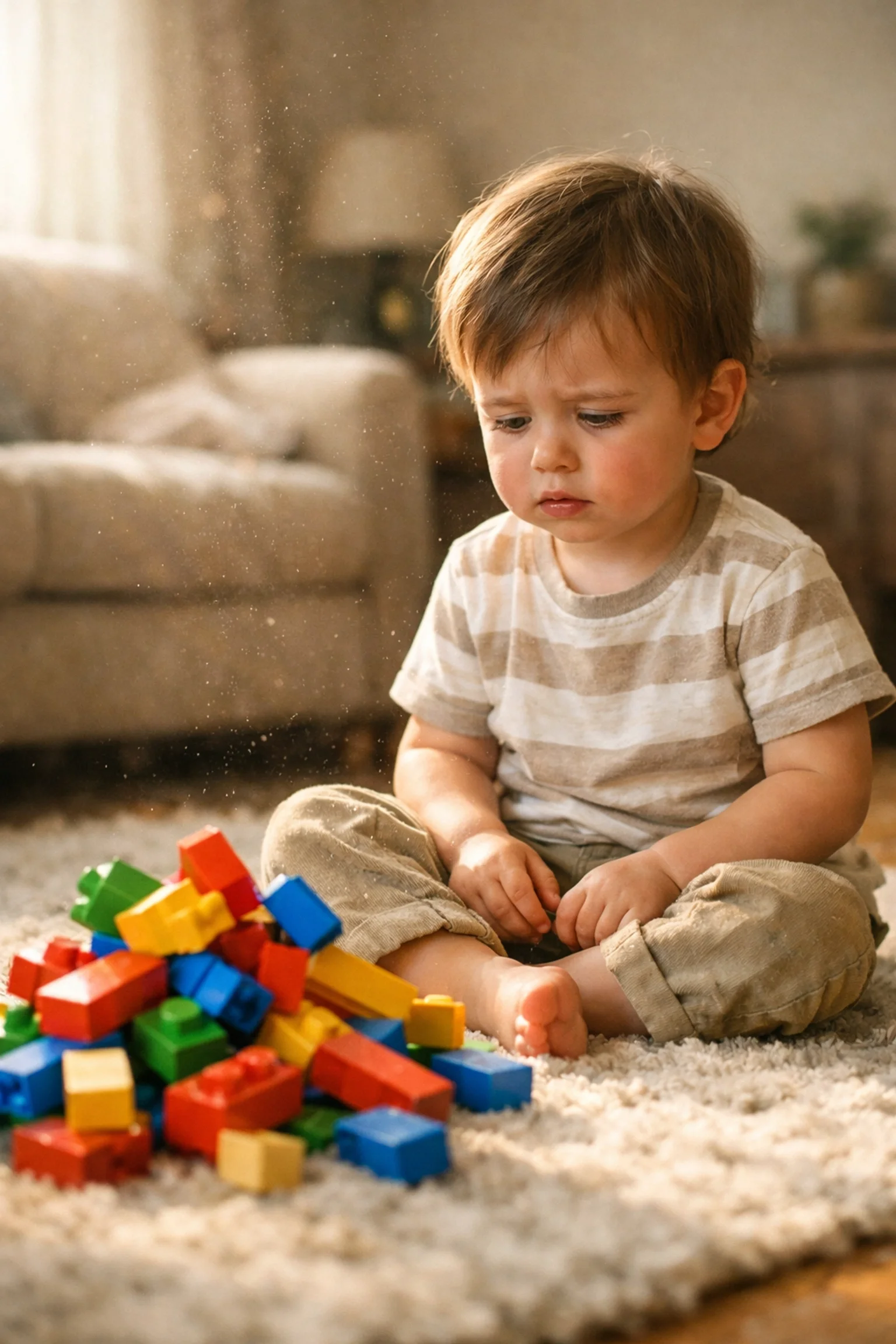
Many of the moms I work with in my therapy for moms practice find that their children fall into the "Highly Sensitive" category. These are the kids who feel everything more deeply. They notice the scratchy tag on their shirt, the slight change in your tone of voice, or the underlying tension in a room.
When you mix high sensitivity with the unique complexities of adoption, you get a child whose emotional "cup" is almost always full. It doesn't take much to make it overflow. This isn't a flaw in your child; it’s a natural response to how their nervous system is built.
If you suspect your child is a "Sensitive Child," you might feel like you’re walking on eggshells. You’re constantly scanning the horizon for triggers, trying to prevent the next explosion. It’s exhausting. But understanding this intersection is the first step toward finding peace in your home.
Common Adoption Triggers (That You Might Not Realize Are Triggers)
One of the most frustrating parts of these meltdowns is that they often seem to come out of nowhere. However, for adopted children, there are specific themes that can trigger a survival response:
Transitions: Moving from one activity to another can feel like a loss of control. To a child with a history of instability, "change" can subconsciously equal "abandonment."
Rejection Sensitivity: A simple "no" or a correction on their homework can feel like a total rejection of who they are. If they feel they aren't "perfect," they might fear they won't be kept.
Identity Questions: As children grow, they start to process their adoption story in new ways. You might notice more meltdowns around birthdays, holidays, or even Mother’s Day. If you're wondering how to navigate these conversations, you might find my post on whether you should tell your child they are adopted helpful.
Sensory Overload: Loud noises, crowded places, or even just a busy school day can overstimulate a sensitive child’s nervous system, leading to a "collapse" once they get home to their "safe place" (you).
How to Help: The "Calm Within the Storm"
So, what do you do when the "smoke detector" is screaming? How do you support your child without losing your own mind? As a therapist with specialized adoption training (C.A.S.E. certified), here are a few practical tools I recommend:
1. Focus on Co-Regulation
Your child cannot calm themselves down when they are in a survival state. Their "thinking brain" is offline. They need to "borrow" your calm nervous system. If you get angry or start yelling, it only confirms to their brain that they are in danger. I know it’s hard, but staying quiet, breathing deeply, and offering a calm presence is the fastest way to lower the temperature.
2. Prioritize Connection Over Correction
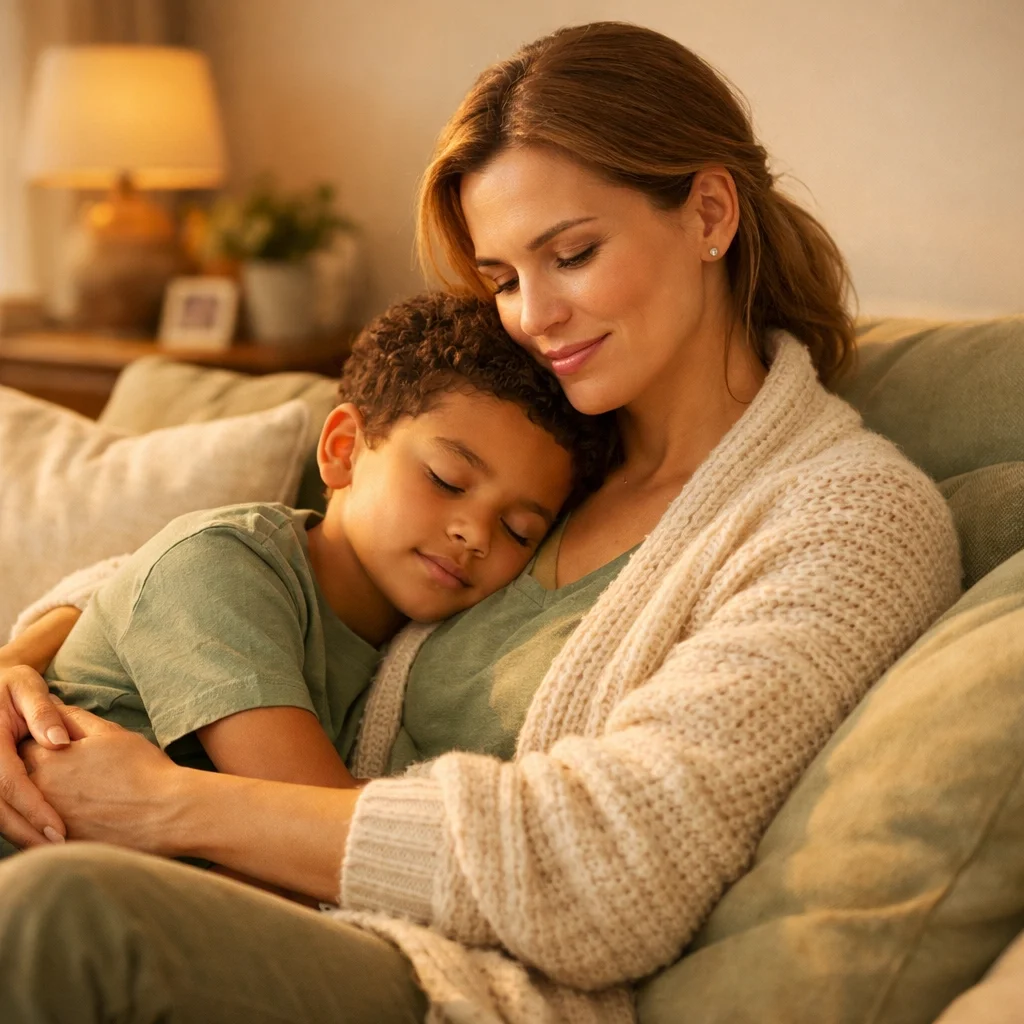
In the middle of a meltdown, it is not the time to teach a lesson about why we don't throw toys. The goal is connection. Once the child is calm, which might take 20 minutes or two hours, then you can talk about the behavior. Use phrases like, "I can see you're having a really hard time. I'm right here with you.
3. Build Predictability
Since transitions are a major trigger, give lots of warnings. Use visual timers or "first/then" charts. The more your child knows what to expect, the safer they feel. Predictability is the antidote to the anxiety that fuels meltdowns.
4. Check the "HALT"
Is your child Hungry, Angry, Lonely, or Tired? For sensitive adopted kids, these physical states amplify emotional responses tenfold. Sometimes a protein-heavy snack can do more for a meltdown than any psychological technique.
You Need Support, Too
I want to pivot back to you for a moment. Parenting a sensitive, adopted child is a marathon, and you cannot run it on an empty tank. It is very common for adoptive mothers to experience "blocked care," where the constant stress and lack of positive feedback from a struggling child make it hard to feel that warm, fuzzy "bonded" feeling.
This isn't because you're a bad mom. It's a physiological response to chronic stress.
I invite you to consider looking into my course specifically designed for parents of sensitive children. It provides deeper strategies for managing these exact scenarios while also giving you the tools to care for your own mental health. You don't have to do this alone.
Moving Forward with Hope

If you feel like you've been stuck in a cycle of meltdowns and guilt, please know that change is possible. Understanding the "why" behind the behavior is half the battle. When you see a meltdown as a cry for safety rather than a sign of defiance, your approach naturally shifts from frustration to compassion.
You aren't failing; your body and mind are just processing a lot right now. If you are navigating the complexities of parenting in NYC and need support, there is a community of experts and other moms who understand exactly what you’re going through.
If you’re ready to move from "survival mode" to a place of deeper connection with your child, I’m here to help. Whether it’s through 1:1 adoption therapy sessions in NYC or my self-paced resources, we can work together to bring peace back to your home.
I invite you to reach out and schedule a session by clicking the button below. Let’s take that first step together.
About the Author
Gayle Weill, LCSW is a licensed psychotherapist specializing in anxiety, postpartum mental health, and adult autism evaluations. She provides virtual therapy to women and mothers in NYC. Through her clinical work, writing, and educational resources, she helps anxious moms of sensitive children regulate their own nervous systems so they can respond with clarity rather than overwhelm.
