


You can overcome mom anxiety by learning to manage anxious thoughts, calming your body's response to stress, and making changes that reduce the pressure you feel each day. Getting enough rest, making room for your own needs, and sharing family tasks can help, too. If anxiety continues to trouble you, or you'd simply like more support, therapy can help you understand what's behind it and find ways to feel more at ease in your daily life as a mother.
Maybe you've spent the whole day getting everyone where they need to be, keeping up with work, and taking care of things at home. You've managed to get through it all, but when you finally sit down, you can't seem to relax. Instead, you're thinking about what you forgot, whether you handled something badly, or what tomorrow might bring.
If this sounds familiar, you're not alone. In this article, we'll look at what you can do to manage these feelings and find some relief from anxiety in your motherhood journey.
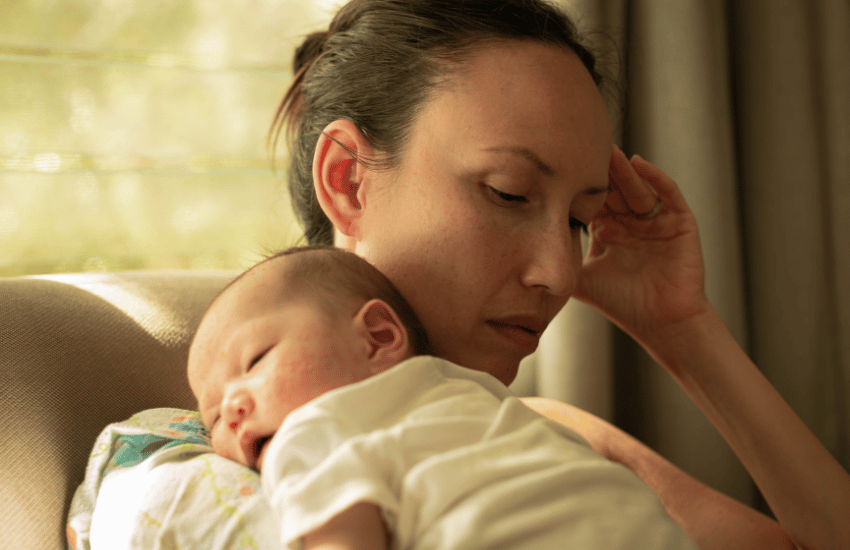
What Does Mom Anxiety Feel Like?
Mom anxiety can leave you worrying constantly, second-guessing your decisions, or feeling overwhelmed by everyday responsibilities. But anxiety isn't limited to your thoughts. It can also affect how you feel physically and how you respond to the people around you, even when you seem to be managing everything well.
Some of the physical signs of mom anxiety include:
Tight shoulders
A clenched jaw
Headaches
An upset stomach
A racing heartbeat
Feeling exhausted but unable to relax
Difficulty sleeping, even when the house is quiet
Anxiety can also make it difficult to quiet your mind. You might repeatedly replay something you said to your child earlier, feel guilty about losing your patience, or lie awake thinking about everything you didn't get done that day. Even when your children are asleep and you finally have time to yourself, your mind may struggle to settle.
With mom anxiety, you may start noticing changes in your behavior without realizing that anxiety is behind them. For example, you may find yourself:
Losing patience over small frustrations
Overplanning or overthinking simple decisions
Feeling guilty when taking time for yourself
Avoiding activities that feel overwhelming
Taking on more responsibilities than you can manage
Is It Normal to Have Anxiety as a Mom?
It's normal to experience some anxiety as a mother, and it's more common than you might think. A study published in the American Journal of Health Promotion found that 19.2% of American adults who lived with children experienced heightened symptoms of anxiety.
You may feel anxious when you're facing a difficult parenting decision, returning to work, or dealing with financial pressure. Feeling worried in these situations doesn't necessarily mean you have an anxiety disorder. But how do you know when it's more than everyday worry?
The difference often comes down to how intense your anxiety feels, how long it lasts, and how much it interferes with your daily life. Everyday worries typically ease once a stressful situation passes and can often be managed with coping strategies or support from loved ones. Anxiety disorders, on the other hand, involve more persistent symptoms that can significantly disrupt daily life and may require professional treatment.

Why Motherhood Turns Anxiety Up
Motherhood comes with a lot to think about, and sometimes it can feel like there's no room to switch off. You're keeping track of school schedules, meals, appointments, work, and everything else your family needs.
Even when you've finished what you planned for the day, there's usually something else waiting for your attention. Over time, the pressure of keeping up with so many responsibilities can contribute to anxiety.
Then there's the pressure you may put on yourself to be a “good” mother. You might set high expectations for how patient, present, or organized you should be as a mother, especially when comparing yourself to other moms. When you don't meet those expectations, it's easy to question yourself or feel like you're falling short, which can add to your anxiety.
You may also receive plenty of parenting advice, even when you haven't asked for it. Your family, friends, and other moms may have different opinions about how you should raise your children. With so many people telling you what they think is best, you may start second-guessing your decisions and worrying that you're getting things wrong.
Being a mother also comes with plenty of reasons to worry about your child, whether it's about their safety, emotional well-being, or future. You can't control everything that happens in your child's life, and that uncertainty can make it difficult to put your worries aside.

Tips for Coping With Anxiety as a Mom
Managing anxiety as a mom isn't always easy, especially when you have so many responsibilities competing for your attention. However, there are practical steps you can take to ease your anxiety and feel more in control of your reactions, including:
1. Practice Progressive Muscle Relaxation
Progressive muscle relaxation (PMR) involves intentionally tensing, holding, and then releasing different muscle groups, one at a time. A systematic review in the Journal of Psychosomatic Research found that PMR significantly reduced anxiety symptoms and improved sleep quality.
When you're anxious, your muscles may stay tense without you realizing it. By practicing PMR, you learn to recognize the difference between tense and relaxed muscles. Over time, this can help you notice when you're holding tension and release it before it builds up, making it easier to feel physically relaxed and less anxious.
Follow these steps to practice progressive muscle relaxation:
Sit somewhere quiet, close your eyes, and take a few deep breaths.
Start by gently clenching your fists for about 10 seconds.
Unclench your hands, take a few breaths, and notice how your muscles feel as they relax.
Repeat with your arms, shoulders, legs, and other muscle groups, one area at a time.
You should feel gentle tension during the exercise, not pain. If a particular movement feels uncomfortable, skip that muscle group and continue with the others.

2. Question Your Anxious Thoughts
When you're feeling anxious, it's easy to assume the worst or judge yourself more harshly than you normally would. You may start treating those thoughts as facts without stopping to consider whether they're actually true.
The next time you notice an anxious thought, try asking yourself:
What actually happened?
Am I assuming the worst or being too critical of myself?
Is there another, more balanced way to look at the situation?
For example, imagine you lost your patience with your daughter this morning. You might think, “I'm a terrible mother.” But losing your patience once doesn't define you as a parent.
A more balanced thought might be, “I didn't handle that moment the way I wanted to. I can apologize to my daughter and try a different response next time.” By looking at the situation more realistically, you may find that what you're worried about isn't as bad or as likely to happen as your anxiety makes it seem.
3. Make Sleep a Priority
Poor sleep can make anxiety worse, and anxiety can make it harder to fall asleep or stay asleep. It's easy to get caught in this cycle, especially when you're juggling the demands of motherhood. That's why finding ways to improve your sleep is an important part of managing anxiety in motherhood.
Try these tips to get more rest:
Go to bed and wake up around the same time each day.
Set aside 20 to 30 minutes to unwind before bed, perhaps by reading or stretching.
Put your phone away before bedtime and avoid caffeine late in the day.
Leave nonurgent household chores for the next day rather than staying up to finish them.
Of course, getting enough sleep isn't always within your control as a mother. Your child may need you during the night, or bedtime may be the only time you have to yourself.
When possible, ask your partner or someone you trust to take over bedtime or an early-morning responsibility so you can rest. If evenings are your only time to yourself, decide ahead of time how long you'll spend reading, watching a show, or doing something you enjoy. That way, you still get time for yourself without staying up much later than you intended.

4. Make Room for Your Own Needs
As a mom, it's easy to become so focused on meeting your family's needs that you overlook your own. You may even feel guilty about taking time for yourself when there's still so much to do. But regularly putting your needs aside can leave you feeling more overwhelmed and anxious.
To make more room for your own needs, first think about what you might be missing. Are you hungry because you've been too busy to eat? Do you need a break from your responsibilities, or have you been missing activities you used to enjoy?
Once you've identified what's missing, look for small ways to make room for it. You might:
Prepare a simple lunch the night before so you're less likely to skip eating during a busy day.
Take a short walk, even if your children come along.
Set aside time to read, exercise, or enjoy a hobby.
Listen to an audiobook or your favorite music while driving or doing household chores.
You don't have to do all these things or follow a perfect self-care routine. Sometimes, taking care of yourself means recognizing that the laundry can wait while you spend half an hour doing something you enjoy.
5. Challenge Habits That Keep Anxiety Going
When you're an anxious mom, it's easy to fall into habits that seem helpful, like preparing for every possible problem or repeatedly asking others for reassurance. These habits may ease your anxiety temporarily, but relying on them can make it harder to feel confident handling uncertainty.
For example, you might repeatedly seek reassurance from others about a parenting decision, hoping their approval will put your mind at ease. But what happens when you face another difficult decision? Instead of seeking reassurance each time, try gathering the information you need, making a choice, and giving yourself time to see how it works.
You might also find yourself spending an hour planning a simple family outing because you're worried something will go wrong. Planning ahead is useful, but you don't need to prepare for every possibility. Make a reasonable plan and remind yourself that you can deal with unexpected problems as they arise.
Sometimes, mom anxiety also leads you to avoid things altogether. Perhaps you've been putting off a conversation with your child's teacher because you're worried about how it will go.
You don't have to tackle everything at once. Start by writing down what you want to say, then decide when you'll have the conversation.

6. Get Help With Family Responsibilities
Sharing childcare and household duties with others reduces the number of things you have to manage each day, giving you more time to rest and attend to your own needs. Here are a few ways to share family tasks and lighten your daily workload:
Identify which parts of your day feel most difficult.
Make specific requests when seeking help.
Have your partner take full responsibility for certain tasks
Give willing family members tasks that suit their schedules.
If you don't have much support available, start with whatever is realistic for your situation. Even having one task taken off your plate regularly can make your days feel more manageable.
7. Consider Therapy for Mom Anxiety
Therapy can help you manage mom anxiety alongside the coping strategies you're already using. In therapy, we can look at what's contributing to your anxiety and how it affects your daily life.
Perhaps you constantly second-guess your parenting decisions, feel guilty whenever you take a break, or struggle to stay calm when things don't go as planned. We'll explore what's behind those patterns and work on ways to respond differently.
My approach to therapy is collaborative. I believe that the people I work with are the experts on their experiences. I want to understand your family history and what's currently contributing to your anxiety. From there, we can work together to get to the root of it and come up with goals specific to your unique situation.
Struggling to Cope With Mom Anxiety? Let's Talk
Motherhood and anxiety many times go hand in hand, but they don't have to. With the right support and coping strategies, you can learn to manage your anxiety and feel more at ease in your daily life.
I've spent years working with parents, children, and families, helping them navigate emotional difficulties and parenting challenges. My specialized training in Child-Parent Psychotherapy, Circle of Security-Parenting, clinical hypnosis, and EMDR also informs how I work with mothers experiencing anxiety. Book your first therapy session to better understand your anxiety and develop healthier ways to respond when it shows up.
About the Author
Gayle Weill, LCSW is a licensed psychotherapist specializing in maternal mental health, adoption competency, and adult autism evaluations. She provides virtual therapy to women and mothers in NYC. Through her clinical work, writing, and educational resources, she helps moms of sensitive children regulate their own nervous systems so they can respond with clarity rather than overwhelm.
