

Open Adoption Boundaries: How to Navigate Birth Parent Dynamics from Day One
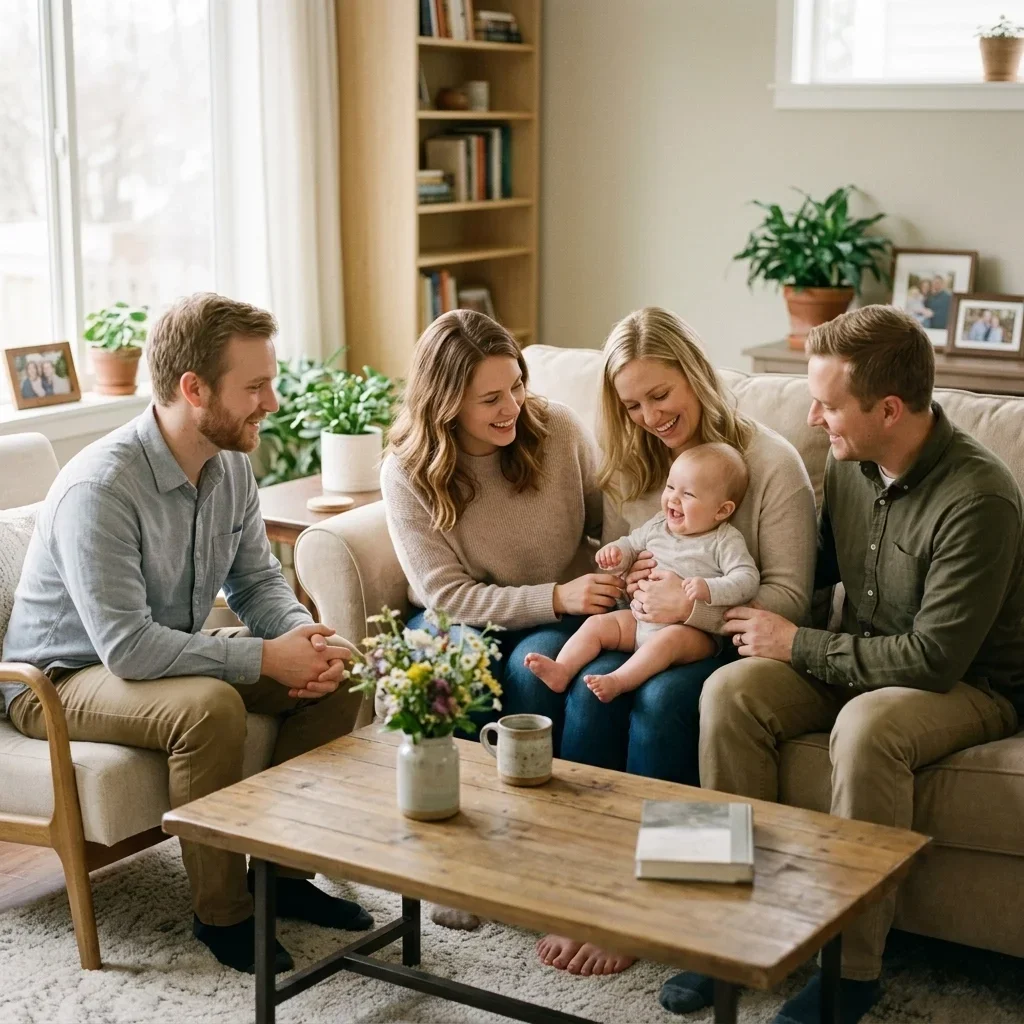
The paperwork is signed. The "hospital wait" is over. You’re back in your Manhattan apartment, and the reality of the "open" in open adoption is finally hitting you. It’s not just a term in a legal document anymore; it’s a living, breathing relationship that started the moment your baby was born.
In the beginning, it feels like you’re trying to build a bridge while simultaneously walking across it. You want to be respectful, you want to be "good" at this, and you definitely want to honor the birth family. But you’re also exhausted, your nervous system is on high alert, and you’re trying to figure out how to be a mother while navigating the complex emotions of another set of parents.
Navigating birth parent dynamics from day one isn't about building walls to keep people out. It’s about creating a structure that allows everyone to show up healthily. It’s about moving from a place of scarcity, where you’re afraid of losing your "status" as the mom, to a place of abundance, where your child has a whole village of people who love them.
Reframing the "B" Word: Boundaries as Connection
When people hear the word "boundaries," they often think of "no." In the world of infant adoption, a boundary is actually a "yes." It’s a "yes" to a stable environment. It’s a "yes" to clear communication. It’s a "yes" to protecting the burgeoning secure attachment between you and your baby.
Think of a boundary like a screen door on a brownstone. It lets the fresh air in, it allows you to see out and others to see in, but it keeps the bugs out. It’s flexible, it’s functional, and it’s there for a reason. If you’re looking for an adoption therapist in Manhattan who can help you dig deep (not just nod along), this is the kind of work you do together: getting clear on what you will and won’t do, how you’ll communicate it, and how to tolerate the discomfort of holding the line.

The Pre-Adoption Contact Agreement (PACA) is Your North Star
If you haven't already solidified a Post-Adoption Contact Agreement, now is the time to get specific. If you do have one, treat it as a living document. Vague promises like "we’ll keep in touch" are the recipe for late-night anxiety.
You need to define the "how," the "when," and the "what":
Communication Channels: Are we texting? Using a specific photo-sharing app? Is social media off-limits for now? In the fast-paced NYC culture, the expectation of an instant reply is real. Set the boundary early: "I check the photo app on Sunday evenings," or "We prefer emails for updates so we can save them for the baby’s life book."
The Frequency of Updates: During the first few months, the birth family may be grieving intensely, and you are bonding intensely. This is a high-emotion intersection. Agreeing on a schedule (e.g., a monthly photo update for the first year) takes the guesswork out of it.
The "First Visit" Logistics: If you are doing in-person visits, where do they happen? A neutral park in Brooklyn? A quiet cafe? Don't feel pressured to host in your home right away if that feels like an intrusion on your nesting period.
Navigating the Manhattan "Supermom" Anxiety
Let’s be real: NYC moms face a specific brand of pressure. You’re likely high-achieving, used to being in control of your career and your life, and now you’re in a situation where you have to share "emotional space" with your child’s birth parents.
The anxiety of "Am I doing enough?" or "Will they regret this?" can be paralyzing. You might feel like you’re constantly performing, trying to prove you’re the perfect mother to the birth mother. This performance is the enemy of secure attachment adoption. When you are performing, you aren't present. When you aren't present, you can't co-regulate with your baby.
If you find yourself spiraling into "what-if" scenarios about the birth parents, it’s a sign that your own post-adoption support needs a boost. This is where Virtual adoption counseling Manhattan becomes a lifesaver. You don't need to navigate the subway or find a sitter; you can dig deep into these anxieties from your couch while the baby naps—this is online therapy for moms in real life, not an extra item on your to-do list.
Secure Attachment Starts with Your Internal Work
Your baby needs to know that you are their primary source of safety and comfort. This is the core of secure attachment adoption. If you are constantly anxious about a text message from a birth parent, your baby picks up on that cortisol.
Setting boundaries isn't "mean": it’s protective of the attachment cycle. If a birth parent is calling at 2am or making demands that feel intrusive, it is your job to hold the line. You aren't doing the birth parent any favors by letting the relationship become chaotic. A chaotic relationship is unsustainable and will eventually lead to a blowout that could damage the connection long-term.
Using Hypnosis to Quiet the Post-Adoption Noise

A lot of the "boundary drama" in open adoption happens in your own head. It’s the intrusive thoughts, the guilt, and the fear of the unknown. While adoption counseling provides the practical tools, sometimes your nervous system needs more than just talk.
I often use hypnosis for anxiety with my NYC clients because it gets past the logical, "over-thinking" brain. If you’re stuck in a loop of "I’m not the ‘real’ mom" or "I’m failing everyone," hypnosis can help rewire those deep-seated beliefs. It allows you to move from a state of high-alert to a state of calm authority. You can be the "CEO" of your family’s boundaries without the constant emotional tax.
Practical Steps for "Day One" Dynamics
Define the "Inner Circle": Who gets to know the details of the birth family relationship? Hint: It’s not your entire playgroup at Central Park. Keep the circle small and supportive.
Wait Before You Post: Before sharing photos of your child on social media, consider the birth family’s perspective and your child’s future privacy. Once it’s online, it’s forever.
Validate the Grief (Yours and Theirs): Open adoption is a "both/and" situation. It is beautiful, and it is born of loss. Acknowledging that the birth parents are hurting doesn't make your joy any less valid.
Schedule the Check-In: Set a recurring "state of the union" talk with your partner (or a trusted friend/therapist) to discuss how the boundaries are holding up. Are they too tight? Too loose?
Why You Shouldn't Do This Alone
The "Day One" phase is messy. You are learning a new language of kinship that most people around you won't understand. They’ll give you well-meaning but terrible advice like "just ignore them" or "it’s your baby now, you don't owe them anything."
That’s not how healthy open adoption works. You owe it to your child to maintain a healthy, boundaried connection with their history. But you also owe it to yourself to not drown in the process.
Whether you are struggling with the logistics of a contact agreement or the internal weight of post-adoption anxiety, specialized post-adoption support is essential. You need someone who understands the nuances of the "primal wound," the legal complexities of NYC adoptions, and the clinical reality of attachment.
If you’re ready to stop second-guessing every text and start feeling like the confident leader of your family, let’s talk. Virtual adoption therapy allows you to dive into the heavy stuff without adding more stress to your schedule.
If you want an Adoption therapist in Manhattan who’s going to help you get clear, get honest, and actually follow through on the boundaries you set, schedule a session by clicking the link below to start building the structure that will support your family for a lifetime.
About the Author
Gayle Weill, LCSW is a licensed psychotherapist specializing in adoption competency, maternal mental health, and adult autism evaluations. She provides virtual therapy to women and mothers in NYC. Through her clinical work, writing, and educational resources, she helps moms of sensitive children regulate their own nervous systems so they can respond with clarity rather than overwhelm.
