

The "Day One" Mom: Why Infant Adoption Requires Its Own Kind of Support
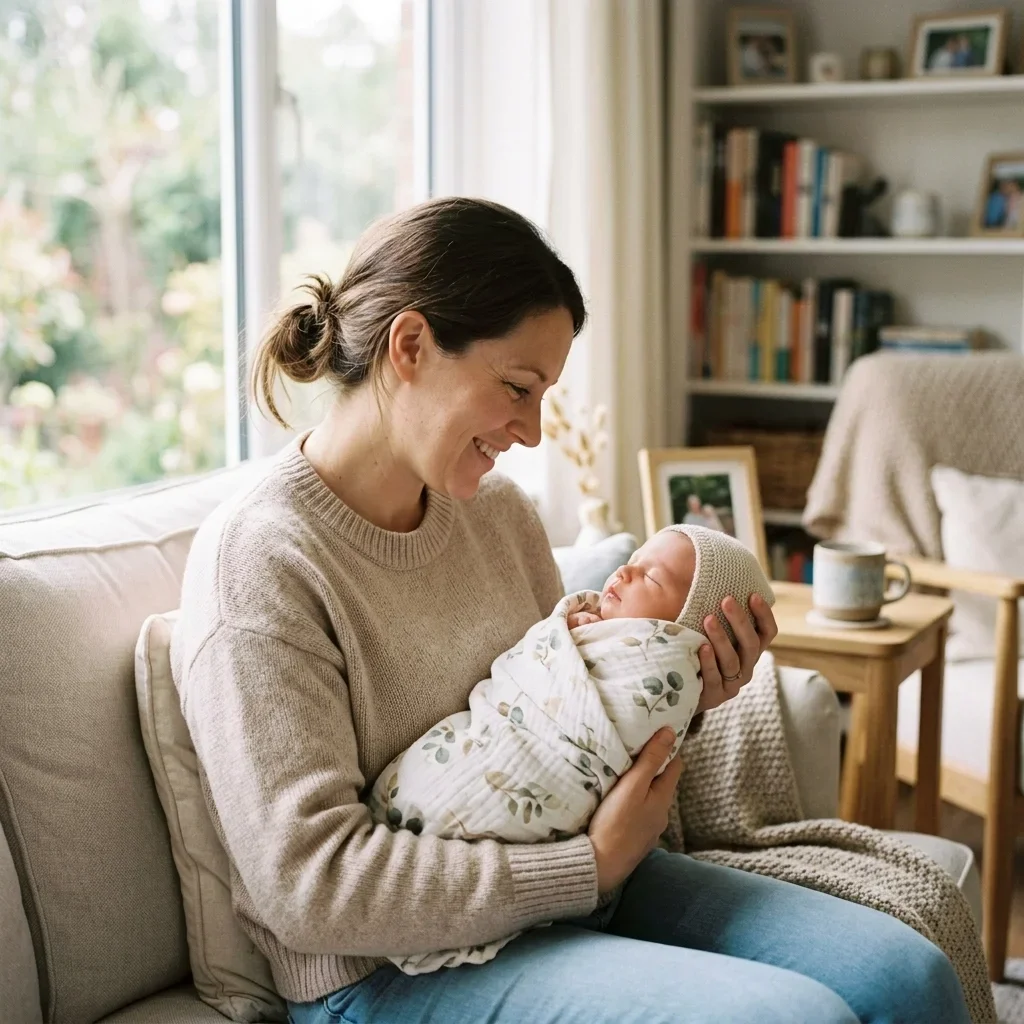
You’ve heard it a thousand times: “Oh, you’re adopting a newborn? At least you get to skip the sleepless nights of the first few weeks!” or “How lucky that you don’t have to deal with the trauma of an older child.”
Let’s be real. If you hear that one more time while you’re balancing a cooling bottle, a mountain of legal paperwork, and the crushing weight of a sudden identity shift, you might just lose it.
There’s a persistent myth that adopting an infant from birth is the "easy" version of adoption. It’s the "clean slate" narrative, and it’s total nonsense. Adopting from day one brings its own specific, high-stakes mental load that most people, even other parents, don’t quite grasp. Whether you’re in a penthouse in Tribeca or a brownstone in Brooklyn, the reality of infant adoption is a unique cocktail of joy, high-functioning anxiety, and a very specific type of exhaustion.
The Hospital Handoff: A Mental Load Like No Other
Most moms get forty weeks to wrap their heads around the idea of a baby. You might have had years of waiting, but the actual transition from "hopeful parent" to "active parent" often happens in a heartbeat. One minute you’re at your desk in Midtown, and the next, you’re in a hospital room that isn't yours, navigating a dynamic that didn't come with a manual.
The mental load of the "Day One" mom starts in that hospital. You are balancing your excitement with the profound respect (and often grief) for the birth mother in the room next door. You’re navigating hospital staff who may or may not know how to handle an adoptive placement. You’re signing papers that feel heavier than the baby you’re finally holding.
This isn't just "new parent jitters." It’s a complex navigation of boundaries, legalities, and intense emotions. By the time you get that baby home to NYC, you’ve already run a marathon that most people don’t even see.

PAD: The Post-Adoption Reality
Everyone talks about Postpartum Depression (PPD), but we need to talk more about Post-Adoption Anxiety and Depression (PAD). You didn't have the hormonal drop-off that comes with birth, but you did have a massive adrenaline crash.
For the infant adoption mom, PAD often manifests as a hyper-vigilance that is exhausting. Because you didn’t give birth, you might feel like you have to "prove" your motherhood. You’re over-analyzing every cry, every nap, and every feeding. You might feel a sense of numbness instead of the "instant bond" you were promised in movies.
In a city like Manhattan, where the pressure to "have it all" and "do it perfectly" is through the roof, this anxiety can become paralyzing. This is where working with an online adoption therapist in Manhattan becomes a game-changer. You don't need a generalist; you need someone who understands that your "postpartum" experience is filtered through the lens of adoption. PAD is real, it’s intense, and it requires a strategy that acknowledges your specific path to motherhood.
The Open Adoption Dance: Starting on the Right Foot
When you adopt from birth, the relationship with the birth family starts on day one, too. Open adoption is widely considered the healthiest route for the child, but that doesn't make it easy for you to navigate in the early days of sleep deprivation.
You’re suddenly part of a triad. You’re figuring out how much to text, what photos to send, and how to honor the birth parents while you’re still trying to figure out how to fold the stroller. There’s often a fear of "doing it wrong" or overstepping boundaries.
Navigating these dynamics requires a high level of emotional intelligence and, frankly, a lot of venting. You need a space to say the "unacceptable" things, like feeling jealous or overwhelmed by the birth family’s involvement, without judgment. Establishing healthy patterns now, in the infancy stage, sets the stage for the rest of your child’s life.

Building the Bond (It’s Not Always Instant)
There is a massive amount of pressure on "Day One" moms to feel an immediate, soul-shattering connection the moment the baby is placed in their arms. When that doesn't happen: when it feels more like you’re babysitting a very demanding stranger: the guilt sets in.
Secure attachment is a process, not an event. Even with a newborn, attachment is built through thousands of tiny interactions: feedings, diaper changes, and 3am rocking sessions. However, for adoptive moms, there’s an added layer of "Am I doing enough?"
Specialized support helps you understand the neurobiology of attachment. It gives you permission to let the bond grow at its own pace while providing practical tools to foster that connection. You’re not "behind" if you don't feel the spark on day two; you’re just navigating a very human transition.
Why the "Virtual Manhattan" Mom Needs a Specialist
If you’re a high-achieving woman in NYC, your time is your most valuable currency. You don’t have two hours to trek to an office in Chelsea or the Upper West Side, sit in a waiting room, and trek back: all while you have a newborn at home and a career that doesn't exactly pause for "baby time."
This is why a virtual adoption therapy NYC is the standard for the modern adoptive mom. You need a specialist who "gets" the infant adoption world: the ICPC delays, the birth parent nuances, the specific anxiety of the revocation period, and you need them available via your laptop during a nap window.
You wouldn't hire a general contractor to fix a vintage Patek Philippe; you shouldn't hire a general therapist to navigate the complexities of infant adoption. You need someone who speaks the language of the adoption triad and understands the unique pressures of raising a child in the New York pressure cooker.

Moving Forward
Adopting from birth is a beautiful, complex, and often overwhelming way to build a family. It’s okay to admit that it’s harder than you expected. It’s okay to seek support that is as specialized as your journey has been.
The goal isn't just to "survive" the first year; it’s to build a foundation of mental health that allows you to actually enjoy the family you worked so hard to create. If you're feeling the weight of PAD, struggling with the "openness" of your adoption, or just feeling like you’re losing your identity in the "Day One" hustle, it’s time to talk to someone who understands the specific nuances of your life.
Schedule a session by clicking the link below, or learn more about my adoption counseling Manhattan services to start navigating the infant adoption journey with clarity and confidence.
About the Author
Gayle Weill, LCSW is a licensed psychotherapist specializing in adoption competency, maternal mental health, and adult autism evaluations. She provides virtual therapy to women and mothers in NYC. Through her clinical work, writing, and educational resources, she helps moms of sensitive children regulate their own nervous systems so they can respond with clarity rather than overwhelm.
